Robust control strategy for single-stage inverters under severe grid disturbances
DOI:
https://doi.org/10.18686/cest771Keywords:
model predictive control; grid-forming inverter; grid-following inverter; fault ride-through; inverter-based resourcesAbstract
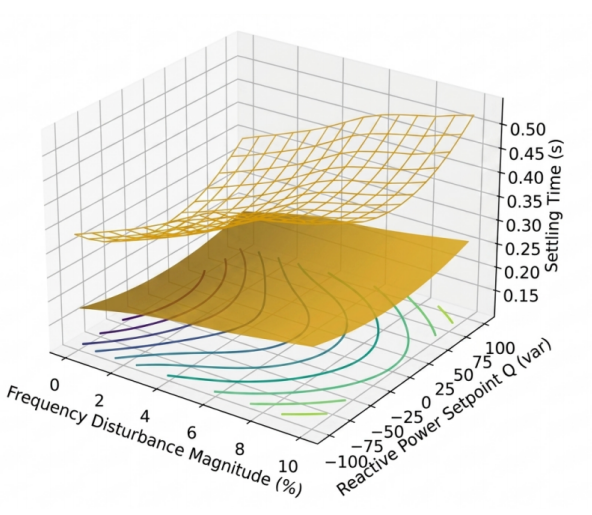
The proliferation of Inverter-Based Resources (IBRs) necessitates the enhancement of control systems to ensure dependable operation, particularly in suboptimal grid conditions. Conventional control methods, such as Phase-Locked Loop (PLL)-based Grid-Following (GFL) and droop-based Grid-Forming (GFM) strategies, often exhibit suboptimal performance under substantial grid disturbances. This paper introduces a novel Model Predictive Universal Control (MPUC) scheme for a single-stage three-phase inverter that effectively integrates both Grid-Forming (GFM) and Grid-Following (GFL) characteristics. The MPUC is designed with a cascaded predictive architecture, wherein the outer loop uses Finite-Control-Set Model Predictive Control (FCS-MPC) for power and voltage regulation, while the inner loop uses Continuous-Control-Set Model Predictive Control (CCS-MPC) for current tracking. The methodology includes a delay-compensation mechanism and a dynamic virtual impedance loop, aimed at improving the feasibility of digital implementation and stabilizing Grid-Forming (GFM) systems. The proposed MPUC is thoroughly assessed, compared with conventional dual-loop PI and droop control methodologies, in MATLAB/Simulink across a range of challenging conditions, including balanced and unbalanced voltage sags and frequency fluctuations. The simulation results indicate a 60% reduction in settling time, a decrease in Total Harmonic Distortion (THD) of the grid current from 4.8% to 2.0% under non-linear loads, as well as a consistent fault ride-through capability. The MPUC provides a cohesive and efficient strategy for enhancing the resilience of next-generation power systems primarily governed by power electronic converters.
References
1. Blaabjerg F, Teodorescu R, Liserre M, et al. Overview of Control and Grid Synchronization for Distributed Power Generation Systems. IEEE Transactions on Industrial Electronics. 2006; 53(5): 1398–1409. doi: 10.1109/TIE.2006.881997
2. Rocabert J, Luna A, Blaabjerg F, et al. Control of Power Converters in AC Microgrids. IEEE Transactions on Power Electronics. 2012; 27(11): 4734–4749. doi: 10.1109/TPEL.2012.2199334
3. Bull SR. Renewable energy today and tomorrow. Proceedings of the IEEE. 2001; 89(8): 1216–1226. doi: 10.1109/5.940290
4. Liserre M, Blaabjerg F, Teodorescu R. Grid Impedance Estimation via Excitation of LCL-Filter Resonance. IEEE Transactions on Industry Applications. 2007; 43(5): 1401–1407. doi: 10.1109/TIA.2007.904439
5. Golestan S, Guerrero JM, Vasquez JC. Three-Phase PLLs: A Review of Recent Advances. IEEE Transactions on Power Electronics. 2017; 32(3): 1894–1907. doi: 10.1109/TPEL.2016.2565642
6. Hakam Y, Tabaa M. Grid-Forming Inverters in Photovoltaic Power Systems: A Comprehensive Review of Modeling, Control, and Stability Perspectives. Energies. 2026; 19(5): 1244. doi: 10.3390/en19051244
7. Hasan MdM, Razmi D, Babayomi O, et al. Advanced control and protection strategies for grid-forming inverters in microgrids—A review. International Journal of Electrical Power & Energy Systems. 2025; 172: 111297. doi: 10.1016/j.ijepes.2025.111297
8. Zhong Q-C, Weiss G. Synchronverters: Inverters That Mimic Synchronous Generators. IEEE Transactions on Industrial Electronics. 2011; 58(4): 1259–1267. doi: 10.1109/TIE.2010.2048839
9. Liu T, Wang X, Liu F, et al. Transient Stability Analysis for Grid-Forming Inverters Transitioning from Islanded to Grid-Connected Mode. IEEE Open Journal of Power Electronics. 2022; 3: 419–432. doi: 10.1109/OJPEL.2022.3189801
10. Barklund E, Pogaku N, Prodanovic M, et al. Energy Management in Autonomous Microgrid Using Stability-Constrained Droop Control of Inverters. IEEE Transactions on Power Electronics. 2008; 23(5): 2346–2352. doi: 10.1109/TPEL.2008.2001910
11. Mohammed N, Udawatte H, Zhou W, et al. Grid-Forming Inverters: A Comparative Study of Different Control Strategies in Frequency and Time Domains. IEEE Open Journal of the Industrial Electronics Society. 2024; 5: 185–214. doi: 10.1109/OJIES.2024.3371985
12. Twining E, Holmes DG. Grid current regulation of a three-phase voltage source inverter with an LCL input filter. IEEE Transactions on Power Electronics. 2003; 18(3): 888–895. doi: 10.1109/TPEL.2003.810838
13. Vazquez S, Rodriguez J, Rivera M, et al. Model Predictive Control for Power Converters and Drives: Advances and Trends. IEEE Transactions on Industrial Electronics. 2017; 64(2): 935–947. doi: 10.1109/TIE.2016.2625238
14. Rodriguez J, Kazmierkowski MP, Espinoza JR, et al. State of the Art of Finite Control Set Model Predictive Control in Power Electronics. IEEE Transactions on Industrial Informatics. 2013; 9(2): 1003–1016. doi: 10.1109/TII.2012.2221469
15. Lin Y, Zhu J, He F. An improved model-free predictive voltage control for grid-forming inverter with adaptive ultra-local data-model in renewable energy system. Frontiers in Energy Research. 2025; 13: 1526992. doi: 10.3389/fenrg.2025.1526992
16. Carnielutti F, Busarello TDC, Resende ÊC, et al. Fixed Switching Frequency Model Predictive Control for Grid-Forming Inverters. IEEE Transactions on Power Electronics. 2025; 40(7): 9080–9089. doi: 10.1109/TPEL.2025.3544823
17. Zeng X, Yang P, Cai H, et al. Predictive Control for Grid-Forming Single-Stage PV System Without Energy Storage. Sustainability. 2025; 17(11): 5227. doi: 10.3390/su17115227
18. Cortes P, Rodriguez J, Quevedo DE, et al. Predictive Current Control Strategy With Imposed Load Current Spectrum. IEEE Transactions on Power Electronics. 2008; 23(2): 612–618. doi: 10.1109/TPEL.2007.915605
19. Kouro S, Cortes P, Vargas R, et al. Model Predictive Control—A Simple and Powerful Method to Control Power Converters. IEEE Transactions on Industrial Electronics. 2009; 56(6): 1826–1838. doi: 10.1109/TIE.2008.2008349
20. Wang X, Chen X. Distributed Coordination of Grid-Forming and Grid-Following Inverter-Based Resources for Optimal Frequency Control in Power Systems. In: Proceedings of the 2025 IEEE Power & Energy Society General Meeting (PESGM); 27–31 July 2025; Austin, TX, USA. doi: 10.1109/PESGM52009.2025.11225381
21. Sadeque F, Sharma D, Mirafzal B. Seamless Grid-Following to Grid-Forming Transition of Inverters Supplying a Microgrid. In: Proceedings of the 2023 IEEE Applied Power Electronics Conference and Exposition (APEC); 19–23 March 2023; Orlando, FL, USA. pp. 594–599. doi: 10.1109/APEC43580.2023.10131661
22. Lei J, Khalil HK. Feedback Linearization for Nonlinear Systems With Time-Varying Input and Output Delays by Using High-Gain Predictors. IEEE Transactions on Automatic Control. 2016; 61(8): 2262–2268. doi: 10.1109/TAC.2015.2491719
23. Rawlings JB, Mayne DQ, Diehl M. Model Predictive Control: Theory, Computation, and Design, 2nd ed. Nob Hill Publishing; 2020.
24. Yameen MZ, Lu Z, El-Sousy FFM, et al. Improving frequency stability in grid-forming inverters with adaptive model predictive control and novel COA-jDE optimized reinforcement learning. Scientific Reports. 2025; 15(1): 16540. doi: 10.1038/s41598-025-00896-5
25. Geyer T. Model Predictive Control of High Power Convertersand Industrial Drives, 1st ed. Wiley; 2016. doi: 10.1002/9781119010883
26. Camacho EF, Bordons C. Constrained Model Predictive Control. In: Model Predictive Control. Springer; 2007. pp. 177–216. doi: 10.1007/978-0-85729-398-5_7
27. Mayne DQ, Rawlings JB, Rao CV, et al. Constrained model predictive control: Stability and optimality. Automatica. 2000; 36(6): 789–814. doi: 10.1016/S0005-1098(99)00214-9
Downloads
Published
How to Cite
Issue
Section
License
Copyright (c) 2026 Mohammed A. Bou-Rabee, Mayar Abdelaziz

This work is licensed under a Creative Commons Attribution 4.0 International License.





.jpg)
.jpg)