Statistical models in electromagnetic field analysis: A Systematic review with implications for clean energy systems
DOI:
https://doi.org/10.18686/cest809Keywords:
electromagnetic fields; statistical electromagnetics; random matrix theory; uncertainty quantification; Monte Carlo methodsAbstract
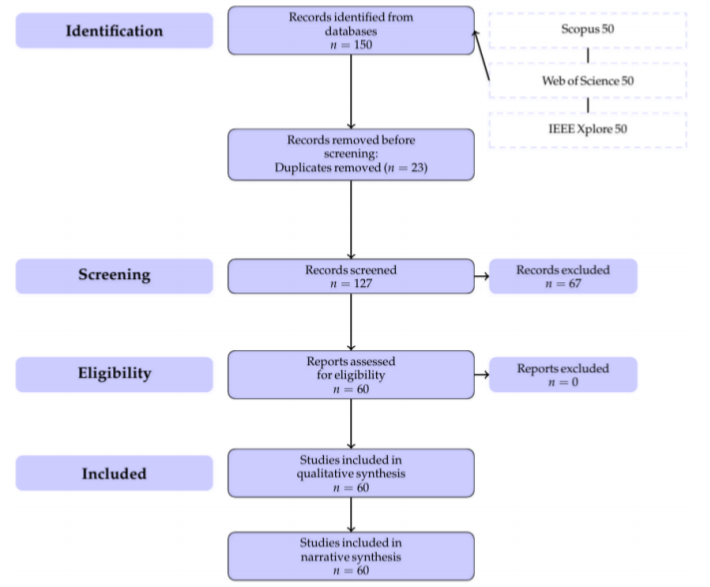
This review examines how uncertainty has been incorporated into electromagnetic field analysis through statistical models derived from Maxwell-based formulations. Following Preferred Reporting Items for Systematic Reviews and Meta-Analyses 2020 (PRISMA 2020), we screened and analyzed 60 peer-reviewed journal and conference papers from Scopus, Web of Science, and IEEE Xplore, and grouped the literature into thirteen recurring model families. Random matrix theory appears most often, representing 31.7% of the corpus, followed by stochastic Green's function methods (16.7%), Monte Carlo simulation (15.0%), and stochastic Maxwell or random-field formulations (13.3%). These numbers show that the field is converging around a limited set of physically grounded approaches instead of remaining dispersed across isolated techniques. The reviewed studies consistently point to the importance of Hill's plane-wave representation, the cavity quality factor, and experimentally tested statistical descriptions for reverberation chambers and other wave-chaotic enclosures. Several issues remain open, especially the definition of the lowest usable frequency, the validity of ergodic assumptions, estimation of the Rician K-factor, and practical criteria for choosing between Monte Carlo and polynomial chaos methods. Comparison across studies indicates that the most suitable model depends on where uncertainty enters the problem, whether through enclosure geometry, material disorder, parameter tolerances, or measurement-based calibration. Although this is not an energy-specific survey, the reviewed methods are relevant to converter-rich energy systems, wireless power transfer, and inverter-dominated installations, where electromagnetic reliability, EMC compliance, and robust design increasingly depend on uncertainty-aware analysis.
References
1. Lin S, Luo S, Ma S, et al. Predicting statistical wave physics in complex enclosures: A stochastic dyadic Green’s function approach. IEEE Transactions on Electromagnetic Compatibility. 2023; 65(2): 436–453. doi: 10.1109/TEMC.2023.3234912
2. Hill DA. Plane wave integral representation for fields in reverberation chambers. IEEE Transactions on Electromagnetic Compatibility. 1998; 40(3): 209–217. doi: 10.1109/15.709418
3. Hill DA. Electromagnetic Fields in Cavities: Deterministic and Statistical Theories. John Wiley & Sons; 2009. pp. 1–24. Available online: https://ieeexplore.ieee.org/servlet/opac?bknumber=5361036
4. Zheng X, Antonsen TM, Ott E. Statistics of impedance and scattering matrices in chaotic microwave cavities: Single channel case. Electromagnetics. 2006; 26(1): 3–35. doi: 10.1080/02726340500214894
5. Arnaut LR. Spatial correlation functions of inhomogeneous random electromagnetic fields. Physical Review E. 2006; 73(3): 036604. doi: 10.1103/PhysRevE.73.036604
6. Arnaut LR. Spatial correlation functions of random electromagnetic fields in the presence of a semi-infinite isotropic medium. Physical Review E. 2006; 74(5): 056610. doi: 10.1103/PhysRevE.74.056610
7. Gradoni G, Arnaut LR, Creagh SC, et al. Wigner-function-based propagation of stochastic field emissions from planar electromagnetic sources. IEEE Transactions on Electromagnetic Compatibility. 2018; 60(3): 580–588. doi: 10.1109/TEMC.2017.2738329
8. Gradoni G, Russer J, Baharuddin M, et al. Stochastic electromagnetic field propagation: Measurement and modelling. Philosophical Transactions of the Royal Society A: Mathematical, Physical and Engineering Sciences. 2018; 376(2134): 20170455. doi: 10.1098/rsta.2017.0455
9. Syed WU, Elfadel IM. Uncertainty quantification using Monte Carlo methods. In: Tapered beams in MEMS. Springer; 2024. pp. 171–178. doi: 10.1007/978-3-031-66391-8_7
10. Liu J, Li H, Xi X. General polynomial chaos-based expansion finite-difference time-domain method for analysing electromagnetic wave propagation in random dispersive media. IET Microwaves, Antennas & Propagation. 2021; 15(2): 221–228. doi: 10.1049/mia2.12040
11. Li X, Meng C, Liu Y, et al. Experimental verification of a stochastic topology approach for high-power microwave effects. IEEE Transactions on Electromagnetic Compatibility. 2015; 57(3): 448–453. doi: 10.1109/TEMC.2014.2384482
12. Li X, Meng C, Liu Y. System-level high power microwave effects analyzed by stochastic topology approach. High Power Laser and Particle Beams. 2015; 27(10): 103244. doi: 10.11884/HPLPB201527.103244 (in Chinese)
13. Chen C, Hong J, Ji L, et al. Invariant measures of stochastic Maxwell equations and ergodic numerical approximations. Journal of Differential Equations. 2025; 416, 1899–1959. doi: 10.1016/j.jde.2024.10.039
14. Zhang L, Zhang Q. Parareal algorithms for stochastic Maxwell equations with the damping term driven by additive noise. Journal of Computational Mathematics. 2025, 44(4): 1105–1125. doi: 10.4208/jcm.2505-m2024-0262
15. Arnaut LR, Gradoni G. Probability distribution of the coherence bandwidth of a reverberation chamber. IEEE Transactions on 964 Antennas and Propagation. 2015; 63(5): 2286–2290. doi: 10.1109/TAP.2015.2403398
16. Corona P, Ferrara G, Migliaccio M. Reverberating chambers as sources of stochastic electromagnetic fields. IEEE Transactions on Electromagnetic Compatibility. 1996;38(3): 348–356. doi: 10.1109/15.536065
17. Spadacini G, Pignari SA. Radiated susceptibility of a twisted-wire pair illuminated by a random plane-wave spectrum. IEICE Transactions on Communications. 2010; E93-B(7): 1781–1787. doi: 10.1587/transcom.E93.B.1781
18. Lampris AC, Veropoulos GP, Vlachos C, et al. A probabilistic study of common-mode and differential-mode responses of a plane-wave excited twisted-wire pair above a perfect ground plane. IEEE Transactions on Electromagnetic Compatibility. 2020; 62(5): 1746–1754. doi: 10.1109/TEMC.2019.2930665
19. Kasper J, Vick R. Model of the stochastic electromagnetic field coupling to multiconductor transmission lines above a ground plane. International Journal of Numerical Modelling: Electronic Networks, Devices and Fields. 2018; 31(4): e2301. doi: 10.1002/jnm.2301
20. Barzegar E, van Eijndhoven SJL, van Beurden M. Scattered field in random dielectric inhomogeneous media: A random resolvent approach. Progress in Electromagnetics Research B. 2015; 62: 29–47. doi: 10.2528/PIERB14111304
21. Martínez-Herrero R, Mejías PM. On the propagation of random electromagnetic fields with position-independent stochastic behavior. Optics Communications. 2010; 283(22): 4467–4469. doi: 10.1016/j.optcom.2010.04.084
22. Bai J, Hu B, Cao H, et al. Uncertainty analysis method for EMC simulation based on the complex number method of moments. Progress In Electromagnetics Research Letters. 2024; 121, 7–12. doi: 10.2528/PIERL24041803
23. Huo S, Bai J, Gao S, et al. Sampling strategy selection for EMC simulation surrogate model in uncertainty analysis and electromagnetic optimization design. Progress In Electromagnetics Research C. 2024; 145, 83–90. doi: 10.2528/PIERC24051003
24. Mahmud R, Abolhassani, M. Ensuring electromagnetic compatibility in grid-connected power converters: Challenges, standards, and compliance strategies. Energy Reports. 2025; 14, 3795–3811. doi: 10.1016/j.egyr.2025.10.022
25. Hu Y, Lei X, Du X, et al. A review on high-frequency electromagnetic interference induced by power electronics in new electric power systems. Global Energy Interconnection. 2025; 8(5), 804–820. doi: 10.1016/j.gloei.2025.05.011
26. Maradei F, Ahn S, Campi T, et al. EMC and EMF safety aspects of wireless power transfer systems for e-mobility. IEEE Electromagnetic Compatibility Magazine. 2024; 13(3), 74–92. doi: 10.1109/MEMC.2024.10834399
27. Page MJ, McKenzie JE, Bossuyt PM, et al. The PRISMA 2020 statement: An updated guideline for reporting systematic reviews. BMJ. 2021; 372: n71. doi: 10.1136/bmj.n71
28. Lin S, Peng Z, Antonsen TM. A stochastic Green’s function for solution of wave propagation in wave‑chaotic environments. IEEE Transactions on Antennas and Propagation. 2020; 68(5): 3919–3933. doi: 10.1109/TAP.2019.2963568
29. Lin S, Shao Y, Peng Z, et al. Statistical characterization of cavity quality factor via the stochastic Green’s function approach. In: Proceedings of the 2023 IEEE Symposium on Electromagnetic Compatibility & Signal/Power Integrity (EMC+SIPI); 29 July 2023–4 August 2023; Grand Rapids, MI, USA. pp. 183–188. doi: 10.1109/EMCSIPI50001.2023.10241638
30. Lin S, Peng Z. On the statistical analysis of space-time wave physics in complex enclosures. In: Proceedings of the 2021 IEEE 30th Conference on Electrical Performance of Electronic Packaging and Systems (EPEPS); 17–20 October 2021; Austin, TX, USA. pp. 1–3. doi: 10.1109/EPEPS51341.2021.9609212
31. Lin S, Peng Z. A novel stochastic wave model statistically replicating reverberation chambers. In: Proceedings of the 2017 IEEE 26th Conference on Electrical Performance of Electronic Packaging and Systems (EPEPS); 15–18 October 2017; San Jose, CA, USA. pp. 1–3.
32. Newman JA, Chen Y, Webb KJ. Zero-mean circular Bessel statistics and Anderson localization. Physical Review E. 2014; 90(2): 022119.
33. Serra R, Canavero F. A one-dimensional interpretation of the statistical behavior of reverberation chambers. In: Proceedings of the 2007 International Conference on Electromagnetics in Advanced Applications (ICEAA); 17–21 September 2007; Turin, Italy. pp. 221–224. doi: 10.1109/ICEAA.2007.4387277
34. Monsef F, Cozza A. Average number of significant modes excited in a mode-stirred reverberation chamber. IEEE Transactions on Electromagnetic Compatibility. 2014; 56(2): 259–265. doi: 10.1109/TEMC.2013.2284924
35. Monsef F, Cozza A. A possible minimum relevance requirement for a statistical approach in a reverberation chamber. IEEE Transactions on Electromagnetic Compatibility. 2015; 57(6): 1728–1731. doi: 10.1109/TEMC.2015.2464318
36. Arnaut LR, Serra R, West PD. Statistical anisotropy in imperfect electromagnetic reverberation. IEEE Transactions on Electromagnetic Compatibility. 2017; 59(1): 3–13. doi: 10.1109/TEMC.2016.2606540
37. Li Y, Zhao X, Yan L, et al. Probabilistic-statistical model based on mode expansion of the EM field of a reverberation chamber and its Monte Carlo simulation. In: Proceedings of the 2016 Asia-Pacific International Symposium on Electromagnetic Compatibility (APEMC); 17–21 May 2016; Shenzhen, China. pp. 779–781. doi: 10.1109/APEMC.2016.7522863
38. Sandeep S, Peterson AF, Wiart J. Whole body SAR estimation of a rodent inside a reverberation chamber. Journal of Electromagnetic Waves and Applications. 2025; 39(18): 2426–2445. doi: 10.1080/09205071.2025.2553103
39. Liu GR. Stochastic wave propagation in Maxwell’s equations. Journal of Statistical Physics. 2015; 158(5): 1126–1146. doi: 10.1007/s10955-014-1148-y
40. Zhou Y, Liang D. Modeling and FDTD discretization of stochastic Maxwell’s equations with Drude dispersion. Journal of Computational Physics. 2024; 509: 113033. doi: 10.1016/j.jcp.2024.113033
41. Wang T, Xu X, Zhao Y. Inverse source problem for the stochastic Maxwell equations in an inhomogeneous medium. SIAM Journal on Applied Mathematics. 2026; 86(1), 116–132. doi: 10.1137/25M1744691
42. Putek P, Zadeh SG, van Rienen U. Multi-objective shape optimization of TESLA-like cavities: Addressing stochastic Maxwell’s eigenproblem constraints. Journal of Computational Physics. 2024; 513: 113125. doi: 10.1016/j.jcp.2024.113125
43. Gladwin KTJ, Vinoy KJ. An efficient SSFEM-POD scheme for wideband stochastic analysis of permittivity variations. IEEE Transactions on Antennas and Propagation. 2023; 71(2): 1654–1661. doi: 10.1109/TAP.2022.3221061
44. Jiao Y, Spanos PD. Boundary elements approach for solving stochastic nonlinear problems with fractional Laplacian terms. Probabilistic Engineering Mechanics. 2020; 59: 103031. doi: 10.1016/j.probengmech.2020.103031
45. Lin S, Peng Z, Schamiloglu E, et al. A novel statistical model for the electromagnetic coupling to electronics inside enclosures. In: Proceedings of the 2019 IEEE International Symposium on Electromagnetic Compatibility, Signal & Power Integrity (EMC+SIPI); 22–26 July 2019; New Orleans, LA, USA. pp. 499–504. doi: 10.1109/ISEMC.2019.8825194
46. Luo S, Lin S, Shao Y, et al. Efficient statistical analysis of EM coupling to PCB power planes in complex enclosures. In: Proceedings of the 2025 IEEE International Symposium on Electromagnetic Compatibility, Signal & Power Integrity (EMC+SIPI); 18–22 August 2025; Raleigh, NC, USA. pp. 274–279. doi: 10.1109/EMCSIPI52291.2025.11169875
47. Robinson MP, Clegg J, Marvin AC. Radio frequency electromagnetic fields in large conducting enclosures: Effects of apertures and human bodies on propagation and field-statistics. IEEE Transactions on Electromagnetic Compatibility. 2006; 48(2): 304–310. doi: 10.1109/TEMC.2006.873856
48. De Ridder S, Manfredi P, De Geest J, et al. A novel methodology to create generative statistical models of interconnects. In: Proceedings of the 2016 IEEE Electrical Design of Advanced Packaging and Systems (EDAPS); 14–16 December 2016; Honolulu, HI, USA. pp. 69–71. doi: 10.1109/EDAPS.2016.7893128
49. Garnier J, Sølna K. On effective attenuation in multiscale composite media. Waves in Random and Complex Media. 2015; 25(4): 482–505.
50. Andreasen J, Cao H. Numerical study of amplified spontaneous emission and lasing in random media. Physical Review A. 2010; 82(6): 063835. doi: 10.1103/PhysRevA.82.063835
51. Colvez M, Cottereau R. High frequency attenuation of elastic waves transmitted at an angle through a randomly-fluctuating horizontally-layered slab. Wave Motion. 2023; 123: 103231. doi: 10.1016/j.wavemoti.2023.103231
52. Hyde MW. Simulating random optical fields: Tutorial. Journal of the Optical Society of America A. 2022; 39(12): 2383–2397. doi: 10.1364/JOSAA.465457
53. Hu Y, Deng X, Chen H, et al. A generalized GBSM for free‑space optical channel modeling. IEEE Photonics Technology Letters. 2025; 38(15): 1078–1081. doi: 10.1109/LPT.2026.3653764
54. Arnaut LR. Sampling distributions of random electromagnetic fields in mesoscopic or dynamical systems. Physical Review E. 2009; 80(3): 036601. doi: 10.1103/PhysRevE.80.036601
55. Arnaut LR. Excess power, energy, and intensity of stochastic fields in quasi‑static and dynamic environments. IEEE Transactions on Electromagnetic Compatibility. 2021; 63(3): 792–802. doi: 10.1109/TEMC.2020.3039376
56. Gradoni G, Madenoor DM, Creagh SC, et al. Near‑field scanning and propagation of correlated low‑frequency radiated emissions. IEEE Transactions on Electromagnetic Compatibility. 2018; 60(6): 2045–2048. doi: 10.1109/TEMC.2017.2778046
57. Mertenskötter L, Kantner M. Frequency noise characterization of narrow‑linewidth semiconductor lasers: A Bayesian approach. IEEE Photonics Journal. 2024; 16(3): 1–7. doi: 10.1109/JPHOT.2024.3385184
58. De Ridder S, Manfredi P, De Geest J, et al. A generative modeling framework for statistical link analysis based on sparse data. IEEE Transactions on Components, Packaging and Manufacturing Technology. 2018; 8(1): 21–31. doi: 10.1109/TCPMT.2017.2761907
59. Sandhu GS. A real‑time statistical polarimetric target model. IEEE Transactions on Aerospace and Electronic Systems. 1988; 24(1): 51–67. doi: 10.1109/7.1035
60. Russ M, Ginzel F, Burkard G. Coupling of three‑spin qubits to their electric environment. Physical Review B. 2016; 94(16): 165411. doi: 10.1103/PhysRevB.94.165411
61. Haba Z. Relativistic diffusive motion in thermal electromagnetic fields. Journal of Physics A: Mathematical and Theoretical. 2013; 46(15): 155001. doi: 10.1088/1751-8113/46/15/155001
62. Csernyava O, Pávó J, Badics Z. Investigation of scattering invariant modes for electromagnetic wave propagation in random vegetation models. In: Proceedings of the 2023 24th International Conference on the Computation of Electromagnetic Fields (COMPUMAG); 22–26 May 2023; Kyoto, Japan. pp. 1–4. doi: 10.1109/COMPUMAG56388.2023.10411788
63. Bremner PG. Modal expansion basis for statistical estimation of maximum expected field strength in enclosures. In: Proceedings of the 2015 IEEE Symposium on Electromagnetic Compatibility and Signal Integrity; 15–21 March 2015; Santa Clara, CA, USA. pp. 46–51. doi: 10.1109/EMCSI.2015.7107657
64. Pignari SA. Statistics and EMC. URSI Radio Science Bulletin. 2006; 316: 13–26. Available online: https://ieeexplore.ieee.org/stamp/stamp.jsp?arnumber=7909357
65. Bremner PG. Recent developments in stochastic power flow enable a new solution for system-level EMC modelling. In: Proceedings of the 2023 IEEE Symposium on Electromagnetic Compatibility & Signal/Power Integrity (EMC+SIPI); 9 July–4 August 2023; Grand Rapids, MI, USA. pp. 159–164. doi: 10.1109/EMCSIPI50001.2023.10241740
66. Lin S, Luo S, Shao Y, et al. Fusion of parameterized and physics-oriented statistical surrogate models for EM coupling on wires in complex electronic enclosures. In: Proceedings of the 2024 IEEE International Symposium on Electromagnetic Compatibility, Signal & Power Integrity (EMC+SIPI); 5–9 August 2024; Phoenix, AZ, USA. pp. 392–397. doi: 10.1109/EMCSIPI49824.2024.10705532
67. Cozza A. Stochastic modeling of impulse responses in reverberating environments. IEEE Transactions on Vehicular Technology. 2019; 68(3): 2111–2123. doi: 10.1109/TVT.2018.2876296
68. Wigner EP. On the statistical distribution of the widths and spacings of nuclear resonance levels. Proceedings of the Cambridge Philosophical Society. 1951; 47(4): 790–798. doi: 10.1017/S0305004100027237
69. Berry MV. Regular and irregular semiclassical wavefunctions. Journal of Physics A: Mathematical and General. 1977; 10(12): 2083–2091. doi: 10.1088/0305-4470/10/12/016
70. Kane MM, Taylor N, Månsson D. Electromagnetic interference from solar photovoltaic systems: A review. Electronics. 2025; 14(1), 31. doi: 10.3390/electronics14010031
71. Jie H, Zhao Z, Zeng Y, et al. A review of intentional electromagnetic interference in power electronics: Conducted and radiated susceptibility. IET Power Electronics. 2024; 17(12), 1487–1506. doi: h10.1049/pel2.12685
72. Niu S, Jia Q, Hu Y, et al. Safety management technologies for wireless electric vehicle charging systems: A review. Electronics. 2025; 14(12), 2380. doi: 10.3390/electronics14122380
73. Huo S, Xue Z, Zhou Y, et al. Credibility assessment of EMC uncertainty analysis based on failure rate. Progress In Electromagnetics Research Letters. 2025; 124, 55–61. doi: 10.2528/PIERL24112906
74. Ma X, Tian E, Xu D. Data-driven modeling and control of wireless power transfer systems. Electronics. 2025; 14(18), 3668. doi: 10.3390/electronics14183668
75. Han H, Bhatti MA. Enhancing wireless charging efficiency: Addressing metal interference through advanced electromagnetic analysis and detection techniques. Wireless Power Transfer. 2024; 11: e008. doi: 10.48130/wpt-0024-0006
76. Aurongjeb M, Liu Y, Ishfaq M. Design and analysis of a high-efficiency dynamic wireless power transfer system for in-motion EV charging. Applied Sciences. 2026; 16(4): 2003. doi: 10.3390/app16042003
77. Latha B, Irfan MM, Flah A, et al. Advances in EV wireless charging technology—A systematic review and future trends. e-Prime—Advances in Electrical Engineering, Electronics and Energy. 2024; 10: 100765. doi: 10.1016/j.prime.2024.100765
78. Badawi A, Elzein IM, El-Bayeh CZ, et al. A review on near-field and far-field wireless power transfer technologies. Energies. 2026; 19(1), 157. doi: 10.3390/en19010157
Downloads
Published
How to Cite
Issue
Section
License
Copyright (c) 2026 Cristian David Correa-Álvarez, Juan Manuel Díaz-Gómez, Enrique Quiceno-Rua

This work is licensed under a Creative Commons Attribution 4.0 International License.





.jpg)
.jpg)