Hydrogen storage in porous aluminosilicate ceramics and light-metal hydrides: Physisorption-chemisorption interplay
DOI:
https://doi.org/10.18686/cest830Keywords:
hydrogen storage; porous aluminosilicate ceramics; metal hydrides; lithium hydride (LiH); chemisorption and physisorption; zeolite-type structureAbstract
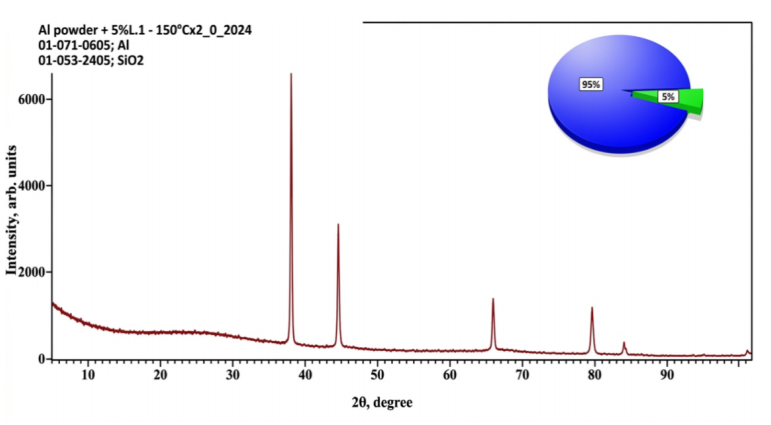
Efficient solid-state hydrogen storage remains a key challenge for hydrogen-based energy systems. In this work, porous aluminosilicate ceramics of the Al-SiO2 composition synthesized with combustible pore-forming additives and selected light-metal hydrides (LiH, TiH2, MgH2) were investigated as hydrogen storage media. The ceramics form a single-phase zeolite-type cubic structure with a = 4.056 Å and a hierarchical pore network (pore diameters 2–28 µm, porosity ≈ 44%) that supports gas transport. Hydrogenation experiments were performed in a high-temperature sealed reactor using gravimetric mass-gain measurements with explicit calibration, blank tests, and uncertainty analysis. Under optimal conditions (200 °C, 12 atm), the porous Al-SiO2 ceramics show a preliminary hydrogen storage capacity of up to 11 wt.% from mass-gain data, indicating strong potential but still requiring confirmation by standard P-C-T characterization. The storage mechanism combines physisorption on the porous framework with chemisorption and hydride-like phase formation (e.g., AlH3), and cyclic tests reveal noticeable structural degradation after about five sorption-desorption cycles. Comparative measurements show capacities of ≈0.7 wt.% for porous nickel, 1.5 wt.% for magnesium, 3.8 wt.% for titanium (near its 4.04 wt.% theoretical limit), and up to 12.4 wt.% for lithium at 700 °C and 12 atm, confirming the strong promise of porous aluminosilicates and light-metal hydrides for solid-state hydrogen storage.
References
1. Liu W, Tupe JA, Aguey‐Zinsou K. Metal Hydride Storage Systems: Approaches to Improve Their Performances. Particle & Particle Systems Characterization. 2025; 42(3): 2400163. doi: 10.1002/ppsc.202400163
2. Sikiru S, Oladosu TL, Amosa TI, et al. Hydrogen-powered horizons: Transformative technologies in clean energy generation, distribution, and storage for sustainable innovation. International Journal of Hydrogen Energy. 2024; 56: 1152–1182. doi: 10.1016/j.ijhydene.2023.12.186
3. Patel SKS, Gupta RK, Rohit MV, et al. Recent Developments in Hydrogen Production, Storage, and Transportation: Challenges, Opportunities, and Perspectives. Fire. 2024; 7(7): 233. doi: 10.3390/fire7070233
4. Beyazit Nİ. Comparative Study of Hydrogen Storage and Metal Hydride Systems: Future Energy Storage Solutions. Processes. 2025; 13(5): 1506. doi: 10.3390/pr13051506
5. Yue M, Lambert H, Pahon E, et al. Hydrogen energy systems: A critical review of technologies, applications, trends and challenges. Renewable and Sustainable Energy Reviews. 2021; 146: 111180. doi: 10.1016/j.rser.2021.111180
6. Li Y, Guo Q, Ding Z, et al. MOFs-Based Materials for Solid-State Hydrogen Storage: Strategies and Perspectives. Chemical Engineering Journal. 2024; 485: 149665. doi: 10.1016/j.cej.2024.149665
7. Miao X, He J, Zhai H, et al. Adjustment the donor-acceptor COFs structure enhances the electron push-pull effect to induce electron transfer to Pt site and improve photocatalytic hydrogen evolution. Carbon. 2025; 239: 120297. doi: 10.1016/j.carbon.2025.120297
8. Alobaid A, Kamil M, Abdelrazek Khalil K. Metal hydrides for solid hydrogen storage: Experimental insights, suitability evaluation, and innovative technical considerations for stationary and mobile applications. International Journal of Hydrogen Energy. 2025; 128: 432–456. doi: 10.1016/j.ijhydene.2025.04.232
9. Wang W, Xu S, Li X, et al. Preparation and Hydrogen Absorption Kinetics Study of Hybrid Molding Metal Hydride Beds. Inorganics. 2026; 14(4): 110. doi: 10.3390/inorganics14040110
10. Minkina VG, Shabunya SI, Kalinin VI, et al. Hydrogen generation from sodium borohydride solutions for stationary applications. International Journal of Hydrogen Energy. 2016; 41(22): 9227–9233. doi: 10.1016/j.ijhydene.2016.03.063
11. Pérez-Botella E, Valencia S, Rey F. Zeolites in Adsorption Processes: State of the Art and Future Prospects. Chemical Reviews. 2022; 122(24): 17647–17695. doi: 10.1021/acs.chemrev.2c00140
12. Bahmanzadegan F, Ghaemi A. A comprehensive review on novel zeolite-based adsorbents for environmental pollutant. Journal of Hazardous Materials Advances. 2025; 17: 100617. doi: 10.1016/j.hazadv.2025.100617
13. Kordala N, Wyszkowski M. Zeolite Properties, Methods of Synthesis, and Selected Applications. Molecules. 2024; 29(5): 1069. doi: 10.3390/molecules29051069
14. Roth WJ, Gil B, Tarach KA, et al. Top-down engineering of zeolite porosity. Chemical Society Reviews. 2025; 54(16): 7484–7560. doi: 10.1039/D5CS00319A
15. Bai Y, Wagner G, Williams CB. Effect of Particle Size Distribution on Powder Packing and Sintering in Binder Jetting Additive Manufacturing of Metals. Journal of Manufacturing Science and Engineering. 2017; 139(8): 081019. doi: 10.1115/1.4036640
16. Ungár T. Microstructural parameters from X-ray diffraction peak broadening. Scripta Materialia. 2004; 51(8): 777–781. doi: 10.1016/j.scriptamat.2004.05.007
17. Balzar D. X-ray diffraction line broadening: modeling and applications to high-Tc superconductors. Journal of Research of the National Institute of Standards and Technology. 1993; 98(3): 321. doi: 10.6028/jres.098.026
18. Hong H, Guo H, Cui Z, et al. Structure modification of magnesium hydride for solid hydrogen storage. International Journal of Hydrogen Energy. 2024; 78: 793–804. doi: 10.1016/j.ijhydene.2024.06.327
19. Tayyab A, Shakil M, Ur Rehman N, et al. Exploring reversible hydrogen storage capacity of Li and Na metal-decorated Sc3N2 monolayer via DFT calculations. Journal of Energy Storage. 2025; 112: 115489. doi: 10.1016/j.est.2025.115489
20. Nemukula E, Mtshali CB, Nemangwele F. Metal Hydrides for Sustainable Hydrogen Storage: A Review. International Journal of Energy Research. 2025; 2025(1): 6300225. doi: 10.1155/er/6300225
21. Zhang S, Ma L, Liu W, et al. Solvent- and catalyst-free hydrogenation synthesis of lithium hydride at high altitude. Chemical Engineering Science. 2024; 295: 120158. doi: 10.1016/j.ces.2024.120158
22. U.S. Department of Energy. Hydrogen, Fuel Cells and Infrastructure Technologies Program Multi-Year Research, Development and Demonstration Plan: Planned Program Activities for 2003–2010. U.S. Department of Energy; 2003. Available online: https://docs.nlr.gov/docs/fy05osti/34289.pdf
23. Broom DP, Book D. Hydrogen storage in nanoporous materials. In: Advances in Hydrogen Production, Storage and Distribution. Elsevier; 2014. pp. 410–450. doi: 10.1533/9780857097736.3.410
24. Sifuentes A, Stowe AC, Smyrl N. Determination of the role of Li2O on the corrosion of lithium hydride. Journal of Alloys and Compounds. 2013; 580: S271–S273. doi: 10.1016/j.jallcom.2013.02.046
25. Bahou S, Labrim H, Lakhal M, et al. Improving the hydrogen storage properties of lithium hydride (LiH) by lithium vacancy defects: Ab initio calculations. Solid State Communications. 2023; 371: 115167. doi: 10.1016/j.ssc.2023.115167
26. Snider JL, Liu YS, Sawvel AM, et al. The influence of LiH and TiH2 on hydrogen storage in MgB2 I: Promotion of bulk hydrogenation at reduced temperature. International Journal of Hydrogen Energy. 2022; 47(1): 387–402. doi: 10.1016/j.ijhydene.2021.09.169
27. Garlea E, King MO, Galloway EC, et al. Identification of lithium hydride and its hydrolysis products with neutron imaging. Journal of Nuclear Materials. 2017; 485: 147–153. doi: 10.1016/j.jnucmat.2016.12.012
Downloads
Published
How to Cite
Issue
Section
License
Copyright (c) 2026 Muxammade-Sultanxan Paizullakhanov, Odiljon Rakhmatov, Feruza Yusupova, Nurmamat Umaraliev, Sirojiddin Ergashev, Shukhrat Sultonov, Umida Xusanova, Shakhnozakhon Nazirjonova, Zulayho Mavlyanova (Nabieva), Yan Yan, Setora Usmanovna Turopova, Umedjon Khalilov, Odilhuja Parpiev

This work is licensed under a Creative Commons Attribution 4.0 International License.





.jpg)
.jpg)