Air pollution hotspots in the European Union: A city-level risk assessment
DOI:
https://doi.org/10.18686/cest622Keywords:
air pollution , PM2.5 , European capitals , energy crisis , urban hotspots , geospatial analysis , environmental justice , sustainable urban planningAbstract
Urban air pollution remains a major challenge for public health and environmental sustainability across the European Union. While much of the existing literature relies on national-level indicators, city-level analyses are essential for identifying persistent urban hotspots and spatial inequalities in exposure. This study examines annual PM2.5 concentrations in European capitals between 2021 and 2024 using data from the IQAir database, which provides harmonized, high-resolution information on fine particulate matter. Geospatial analysis and GeoAI-inspired exploratory approaches were employed to support the identification of intra- and inter-urban pollution patterns. The results reveal a structural break in 2022, when the energy crisis coincided with a temporary increase in PM2.5 concentrations, interrupting an otherwise improving trend. Systematic differences were observed between Western–Northern capitals, which exhibited lower concentrations and more favorable trends, and Eastern–Southern capitals, where exceedances persisted throughout the study period. A focused comparison of Budapest with Vienna, Warsaw, and Prague highlights the intermediate position of the Hungarian capital within Central Europe. Overall, the findings demonstrate the sensitivity of urban air quality to external shocks and the persistence of spatial disparities, while illustrating the potential of open-access air quality data to support evidence-based urban environmental policy and sustainable planning. The selected 2021–2024 period captures the post-COVID normalization phase and the 2022 energy crisis, enabling the analysis of short-term structural disruptions rather than long-term emission trajectories.
References
1. Pope CA, Dockery DW. Health Effects of Fine Particulate Air Pollution: Lines that Connect. Journal of the Air and Waste Management Association. 2006; 56(6): 709–742. doi: 10.1080/10473289.2006.10464485
2. Aghaei Y, Badami MM, Tohidi R, et al. The Impact of the Russia–Ukraine Geopolitical Conflict on the Air Quality and Toxicological Properties of Ambient PM2.5 in Milan, Italy. Scientific Reports. 2024; 14: 5996. doi: 10.1038/s41598-024-55292-2
3. Burnett R, Chen H, Szyszkowicz M, et al. Global Estimates of Mortality Associated with Long-Term Exposure to Outdoor Fine Particulate Matter. Proceedings of the National Academy of Sciences of the United States of America. 2018; 115: 9592–9597. doi: 10.1073/pnas.1803222115
4. Lelieveld J, Pozzer A, Pöschl U, et al. Loss of Life Expectancy from Air Pollution Compared to Other Risk Factors: A Worldwide Perspective. Cardiovascular Research. 2020; 116(11): 1910–1917. doi: 10.1093/cvr/cvaa025
5. World Health Organization. WHO Global Air Quality Guidelines: Particulate Matter (PM2.5 and PM10), Ozone, Nitrogen Dioxide, Sulfur Dioxide and Carbon Monoxide. World Health Organization; 2021. Available online: https://apps.who.int/iris/handle/10665/345329
6. IQAir. Interactive global map of 2024 PM2.5 concentrations by city. Available online: https://www.iqair.com/world-air-quality-report (accessed on 31 August 2025).
7. European Environment Agency. Air Quality in Europe 2022. European Environment Agency; 2022. Available online: https://www.eea.europa.eu/publications/air-quality-in-europe-2022
8. Krzyżewska A. Breathing Cities: Air Quality, Population Exposure, and Sustainability Implications in 33 European Capitals. Sustainability. 2025; 17(16): 7476. doi: 10.3390/su17167476
9. Sangkham S, Phairuang W, Sherchan SP, et al. An update on adverse health effects from exposure to PM2.5. Environmental Advances. 2024; 18: 100603. doi: 10.1016/j.envadv.2024.100603
10. Guo H. Research on Ecological Design of Intelligent Manhole Covers Based on Fuzzy Analytic Hierarchy Process. Sustainability. 2024; 16: 5310. doi: 10.3390/su16135310
11. Lee J, Barquilla CA, Park K. Urban Form and Seasonal PM2.5 Dynamics: Enhancing Air Quality Prediction Using Interpretable Machine Learning and IoT Sensor Data. Sustainable Cities and Society. 2024; 117: 105976. doi: 10.1016/j.scs.2024.105976
12. Pisoni E, Zauli-Sajani S, Belis CA, et al. High resolution assessment of air quality and health in Europe under different climate mitigation scenarios. Nature Communications. 2025; 16(1): 5134. doi: 10.1038/s41467-025-60449-2
13. Wang Y, Dai X, Gong D, et al. Correlations between Urban Morphological Indicators and PM2.5 Pollution at Street-Level: Implications on Urban Spatial Optimization. Atmosphere. 2024; 15: 341. doi: 10.3390/atmos15030341
14. Fiore AM, Naik V, Leibensperger EM. Air Quality and Climate Connections. Journal of the Air and Waste Management Association. 2015; 65: 645–685. doi: 10.1080/10962247.2015.1040526
15. Chu Y, Yao J, Qiao D, et al. Three-hourly PM2.5 and O3 concentrations prediction based on time series decomposition and LSTM model with attention mechanism. Atmospheric Pollution Research. 2023; 14: 101879. doi: 10.1016/j.apr.2023.101879
16. García-Herrera R, Díaz J, Trigo RM, et al. A Review of the European Summer Heat Wave of 2003. Critical Reviews in Environmental Science and Technology. 2010; 40(4): 267–306. doi: 10.1080/10643380802238137
17. The Guardian. Air Pollution Levels have Improved in Europe over 20 Years, Say Researchers. Available online: https://www.theguardian.com/environment/2024/mar/13/air-pollution-levels-have-improved-in-europe-over-20-years-say-researchers (accessed on 31 August 2025).
18. Energy Policy Institute at the University of Chicago. Air Quality Life Index (AQLI): Europe 2022–2024 Fact Sheet. Energy Policy Institute at the University of Chicago; 2024.
19. Dmitrašinović T, Rajšić S, Živković M, et al. Winter and Summer PM2.5 Land Use Regression Models for the City of Novi Sad, Serbia. Sustainability. 2024; 16: 5314. doi: 10.3390/su16135314
20. OECD. The Economic Cost of Air Pollution: Evidence from Europe. OECD; 2019. doi: 10.1787/56119490-en
21. Beelen R, Hoek G, Pebesma E, et al. Mapping of Background Air Pollution at a Fine Spatial Scale across the European Union. Science of the Total Environment. 2009; 407: 1852–1867. doi: 10.1016/j.scitotenv.2008.11.048
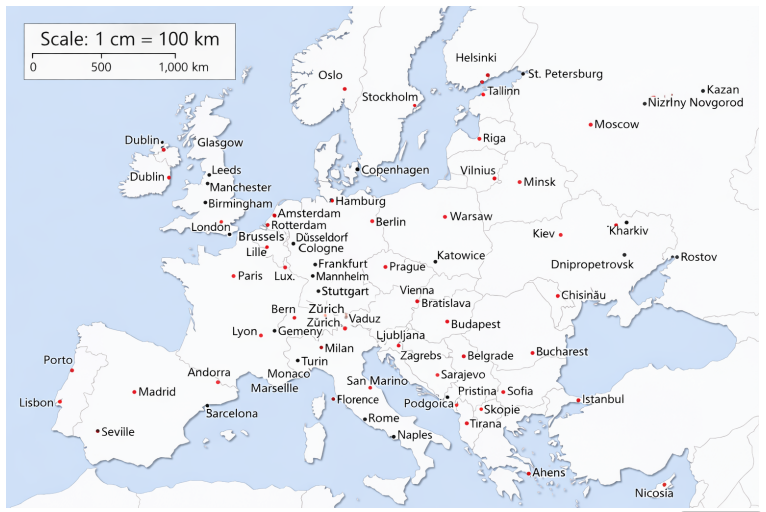
22. Cities and Capitals of Europe. Available online: https://www.freeworldmaps.net/europe/cities.html (accessed on 13 November 2025).
23. Ma Y, Nobile F, Marb A, et al. Air pollution changes due to COVID-19 lockdowns and attributable mortality changes in four countries. Environment International. 2024; 187: 108668. doi: 10.1016/j.envint.2024.108668
24. Tertre MG. Structural changes in energy markets and price implications: Effects of the recent energy crisis and perspectives of the green transition. Available online: https://www.ecb.europa.eu/press/conferences/ecbforum/shared/pdf/2023/Gil_Tertre_paper.pdf (accessed on 31 August 2025).
25. Harm to human health from air pollution in Europe: Burden of disease status. Available online: https://www.eea.europa.eu/en/analysis/publications/harm-to-human-health-from-air-pollution-burden-of-disease-status-2025 (accessed on 15 November 2025).
26. Air quality standards database. Available online: https://www.who.int/tools/air-quality-standards (accessed on 31 August 2025).
27. European Environment Agency. Particulate matter—PM2.5. Available online: https://www.eea.europa.eu/en/analysis/publications/air-quality-status-report-2025/particulate-matter-pm2.5 (accessed on 31 August 2025).
28. Worldometers. Hungary Population. Available online: https://www.worldometers.info/world-population/hungary-population/ (accessed on 31 August 2025).
29. Worldometers. Austria Population. Available online: https://www.worldometers.info/world-population/austria-population/ (accessed on 31 August 2025).
30. Worldometers. Poland Population. Available online: https://www.worldometers.info/world-population/poland-population/ (accessed on 31 August 2025).
31. Worldometers. Czech Republic Population. Available online: https://www.worldometers.info/world-population/czechia-population/ (accessed on 31 August 2025).
32. OECD. The Metropolitan Century. OECD; 2024. Available online: https://www.oecd.org/en/publications/the-metropolitan-century_9789264228733-en.html (accessed on 31 August 2025).
33. Salvati L, Serra P, Bencardino M, et al. Re-urbanizing the European City: A multivariate analysis of population dynamics during expansion and recession times. European Journal of Population. 2018; 35: 1–28. doi: 10.1007/s10680-017-9462-0
34. Novotný L. Urban development and migration processes in the urban region of Bratislava from the post-socialist transformation until the global economic crisis. Urban Geography. 2016; 37: 1009–1029. doi: 10.1080/02723638.2016.1139413
35. Cottineau C, Hatna E, Arcaute E, et al. Diverse cities or the systematic paradox of Urban Scaling Laws. Computers Environment and Urban Systems. 2016; 63: 80–94. doi: 10.1016/j.compenvurbsys.2016.04.006
36. Duran-Sala M, Hendrick M, Manoli G. Universal scaling of intra-urban climate fluctuations. arXiv preprint. 2025; arXiv:2505.19998. doi: 10.48550/arXiv.2505.19998
37. Rezaei N, Millard-Ball A. Urban form and its impacts on air pollution and access to green space: A global analysis of 462 cities. PLoS One. 2023; 18: e0278265. doi: 10.1371/journal.pone.0278265
38. Cohen J. Statistical Power Analysis for the Behavioral Sciences, 2nd ed. Lawrence Erlbaum Associates; 1988.
39. Field A. Discovering Statistics Using IBM SPSS Statistics, 5th ed. Sage; 2018.
40. The University of Chicago. As the EU Tightens Its Pollution Standard, Most Eastern European Countries Won’t Be Complying, Cutting Their Lives Shorter than Their Western Neighbors. Available online: https://epic.uchicago.edu/insights/as-the-eu-tightens-its-pollution-standard-most-eastern-european-countries-wont-be-complying-cutting-their-lives-shorter-than-their-western-neighbors/ (accessed on 31 August 2025).
41. Andersen ZJ, Badyda A, Tzivian L, et al. Air pollution inequalities in Europe: A deeper understating of challenges in Eastern Europe and pathways forward towards closing the gap between East and West. Environmental Epidemiology. 2025; 9(3): e383. doi: 10.1097/ee9.0000000000000383
42. European Union Regional Air Quality Snapshot. Available online: https://www.stateofglobalair.org/resources/factsheet/european-union-regional-air-quality-snapshot (accessed on 31 August 2025).
43. Jackson RB, Friedlingstein P, Le Quéré C, et al. Global fossil carbon emissions rebound near pre-COVID-19 levels. Environmental Research Letters. 2022; 17: 031001. doi: 10.1088/1748-9326/ac55b6
44. Hoffmann B, Boogaard H, de Nazelle A, et al. WHO Air Quality Guidelines 2021–Aiming for Healthier Air for all: A Joint Statement by Medical, Public Health, Scientific Societies and Patient Representative Organisations. International Journal of Public Health. 2021; 66. doi: 10.3389/ijph.2021.1604465
45. Huszar P, Patricio A, Bartík L, et al. Impact of urbanization on fine particulate matter concentrations over central Europe. Atmospheric Chemistry and Physics. 2024; 24(1): 397–425. doi: 10.5194/acp-24-397-2024
46. Dai T, Dai Q, Ding J, et al. Measuring the emission changes and meteorological dependence of source‐specific BC aerosol using factor analysis coupled with machine learning. Journal of Geophysical Research: Atmospheres. 2023; 128(15): e2023JD038696. doi: 10.1029/2023JD038696
47. Brown AF, Ma GX, Miranda J, et al. Structural interventions to reduce and eliminate health disparities. American Journal of Public Health. 2019; 109: S72–S78. doi: 10.2105/AJPH.2018.304844
48. Kuzior A, Vysochyna A, Augustyniak W, et al. Forecasting of macroeconomic stability post-pandemic recovery: The case of European countries. Journal of International Studies. 2024; 17(4): 56–79. doi: 10.14254/2071-8330.2024/17-4/4
49. Gamarra AR, Vivanco MG, Theobald MR, et al. Changes in emissions of NOx and PM2.5 as a result of the implementation of measures in sectors close to the population: Energy efficiency in residential buildings, and passenger cars substitution. Logistics, Supply Chain, Sustainability and Global Challenges. 2025; 16(1): 1–12. doi: 10.2478/jlst-2025-0002
50. Golubchikov O, Deda P. Governance, technology, and equity: An integrated policy framework for energy efficient housing. Energy Policy. 2012; 41: 733–741. doi: 10.1016/j.enpol.2011.11.039
Downloads
Published
How to Cite
Issue
Section
License
Copyright (c) 2026 András Szeberényi, Ágnes Fűrész, Mátyás Imre Kovács

This work is licensed under a Creative Commons Attribution 4.0 International License.





.jpg)
.jpg)